
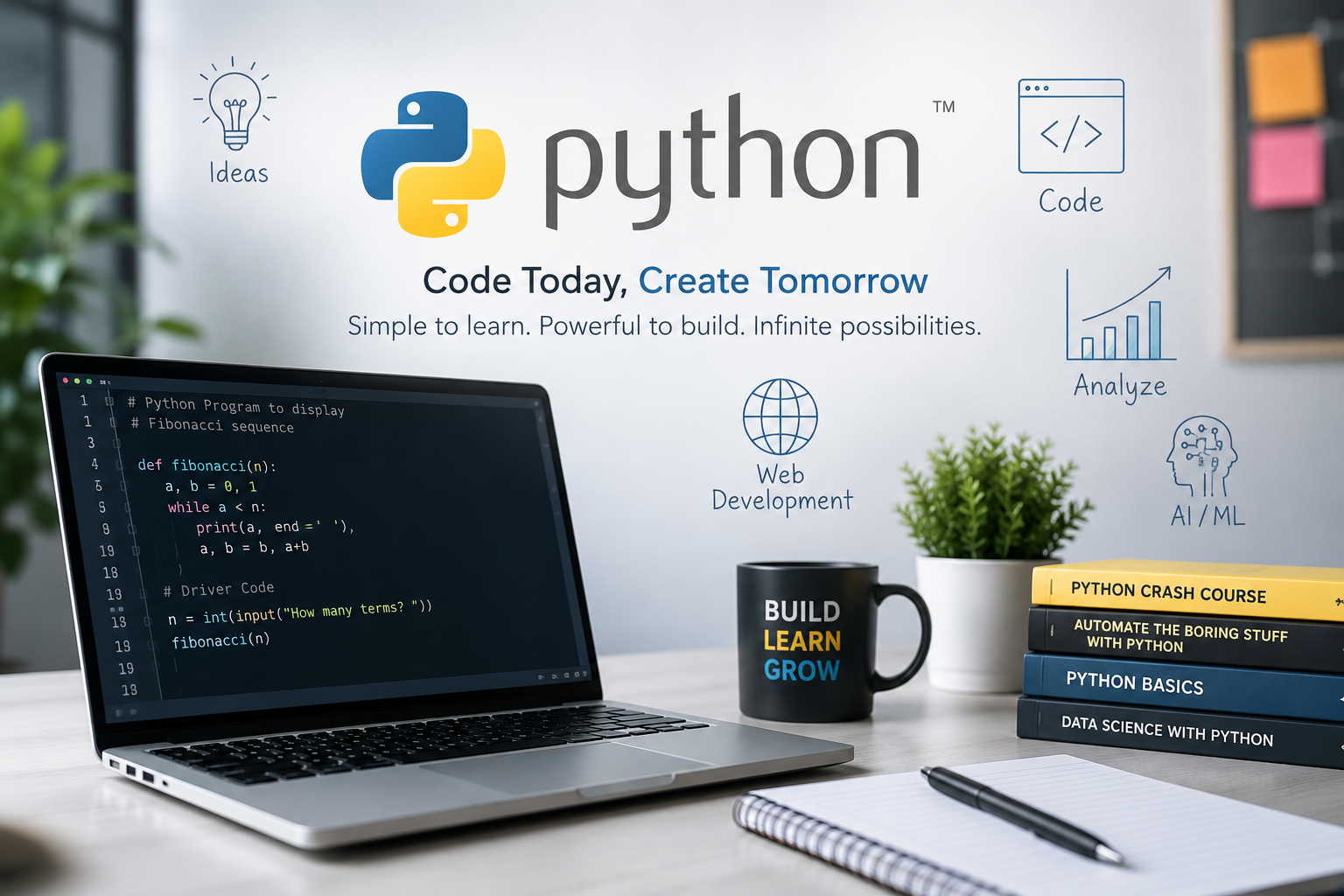
Code Your Future
Why High School is the Absolute Perfect Time to Learn Python

Think about the tech you used today. Maybe you scrolled through TikTok, asked ChatGPT to help rephrase a paragraph, or logged into Netflix. Behind every single one of those platforms is code.
For a long time, programming felt like a superpower reserved for tech geniuses in dark rooms typing complex symbols. But the landscape has completely shifted. Today, coding is becoming as foundational as reading or basic algebra. If you want a superpower that lets you build things, solve massive problems, and literally shape the future, you need to learn Python.
And if you are in high school right now? You are at the absolute perfect age to start.
What Exactly is Python? (And Why Does Everyone Love It?)
If you've ever looked at programming languages like C++ or Java, they can look incredibly intimidating. They are filled with curly brackets {}, complex semi-colons, and rigid rules that make your computer throw a tantrum if you miss a single character.
Python is different. Created by Guido van Rossum and released in 1991, Python was designed with one core philosophy: readability.
Python looks surprisingly like regular English. Let’s look at a quick comparison. If you want to print "Hello, World!" on your screen, here is what it looks like in Java versus Python:
Java
Java
public class HelloWorld {
    public static void main(String[] args) {
        System.out.println("Hello, World!");
    }
}
Python
Python
print("Hello, World!")
That’s it. One line. Because Python doesn't force you to wrestle with complicated grammar, you spend less time fighting formatting errors and more time actually building your ideas.
Why High School Students Have a Secret Advantage
High school can feel packed with homework, sports, and social life, but it is also a unique window of time where your brain is wired to learn complex logic faster than at any other point in your life. Here is why you should jump in now:
Zero Professional Pressure: You don't have a boss breathing down your neck or a client demanding a finished app by tomorrow morning. You can learn entirely through play. Want to write a script that automatically downloads your favorite wallpapers? Or a bot that alerts you when concert tickets go on sale? You have the freedom to build whatever you want.
The Ultimate Resume Supercharge: Whether you want to go into computer science, medicine, business, art, or environmental science, having "Proficient in Python" on your college applications or early resumes instantly sets you apart. According to industry data, Python consistently ranks as one of the top two most in-demand languages globally.
Crush Your Math and Science Classes: Python is essentially interactive logic. When you learn how variables, loops, and conditions work in code, algebra and physics suddenly start making perfect sense because you can visualize how formulas operate in real-time.
The Modern World's Secret Engine
Learning Python isn't just about preparing for a hypothetical future career; it's about understanding how the modern world works right now.
Python is a "general-purpose language," meaning it can do almost anything. Because it's so versatile, it has become the backbone of the world's most successful tech giants:
Company | How They Use Python |
Netflix | Uses Python to power the recommendation algorithms that predict exactly what movie you want to watch next. |
Their entire backend infrastructure—handling billions of photo uploads and likes daily—runs largely on Python. | |
NASA | Scientists use Python to process massive data streams from space telescopes and map out rover pathways on Mars. |
Spotify | Leverages Python for backend data analysis to curate your personalized "Discover Weekly" playlists. |
Python’s Crowning Achievement: Powering the AI Revolution
If there is one definitive reason why Python is the most important language to learn today, it is this: Python runs Artificial Intelligence (AI) and Machine Learning (ML).
Every major breakthrough you see in the news—from ChatGPT and Google Gemini to self-driving cars and AI generated art—is built on Python.
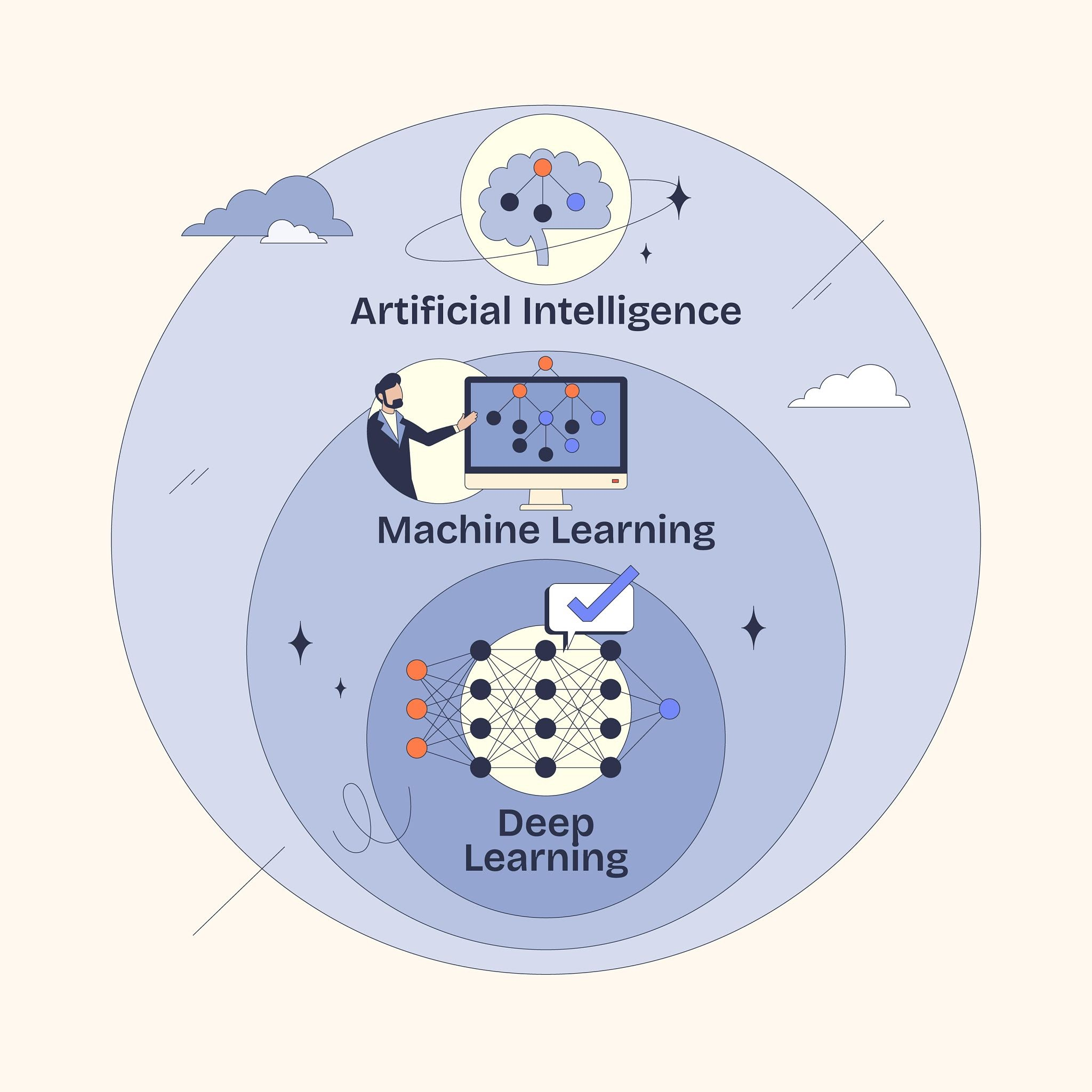
Why did the global scientific community pick Python for AI? Because of its massive ecosystem of open-source libraries (pre-written code that anyone can use for free). Instead of spending three years writing the math to recognize a human face in a photo, a developer can import a Python library and do it in five lines of code.
Here are the tools driving the modern world:
TensorFlow & PyTorch: The massive engines used to train deep neural networks (the systems that mimic the human brain to learn complex patterns).
Pandas & NumPy: The ultimate toolkits for data scientists to sort through millions of rows of data in fractions of a second.
Scikit-learn: Used for classic machine learning tasks, like predicting house prices or detecting email spam.
When you learn Python, you aren't just learning how to make a computer calculate numbers; you are learning the exact language used to build digital minds.
How Coding Transforms Your Brain (The Real Benefit)
When you learn to code, the biggest benefit isn't the syntax you type into the editor. The real transformation happens in how you think.
Coding teaches you computational thinking—the ability to take a massive, overwhelming problem and break it down into tiny, manageable steps.
If a feature in your code doesn’t work, you don't panic. You look at the error log, trace the logic line by line, and find the bug.
This builds a rare kind of resilience.
When you realize that an error message isn't a sign of failure, but just a puzzle piece waiting to be flipped the right way, your approach to challenges changes completely. You become a world-class problem solver, a skill that is priceless whether you become a programmer, a doctor, an artist, or an entrepreneur.
Ready to Start? Your First Step Takes 5 Minutes
The worst thing you can do is buy a dry, 800-page textbook. Coding is a hands-on craft. You learn it by breaking things, fixing them, and experimenting.
Here is the easiest path to get started today:
Skip the Install (For Now): Open your browser and go to Replit or Google Colab. These platforms let you write and run Python code directly in your browser without downloading a thing.
Write Your First Script: Try creating a program that asks for your birth year and calculates exactly how many days old you are.
Gamify Your Learning: Check out free platforms like Codecademy, freeCodeCamp, or w3schools. They offer interactive tracks designed specifically to make learning feel like leveling up in a video game.
The future is going to be written in code. The only question left is: do you want to just use the technology other people build, or do you want to be the one who creates it?